Willow (Salix): species in the Czech Republic, identification, ecology and growing
Scientific name: Salix
Willows (genus Salix) are fast-growing deciduous woody plants ranging from low shrubs to trees that shape riverbanks, wetlands and mountain bogs. They matter to the landscape because they stabilise soil, feed early pollinators, and tolerate pruning and flooding—making them among the most practical woody plants for watersides and gardens alike.
 Tomáš Rohlena
9 min read
This article was translated from Czech. Čeština
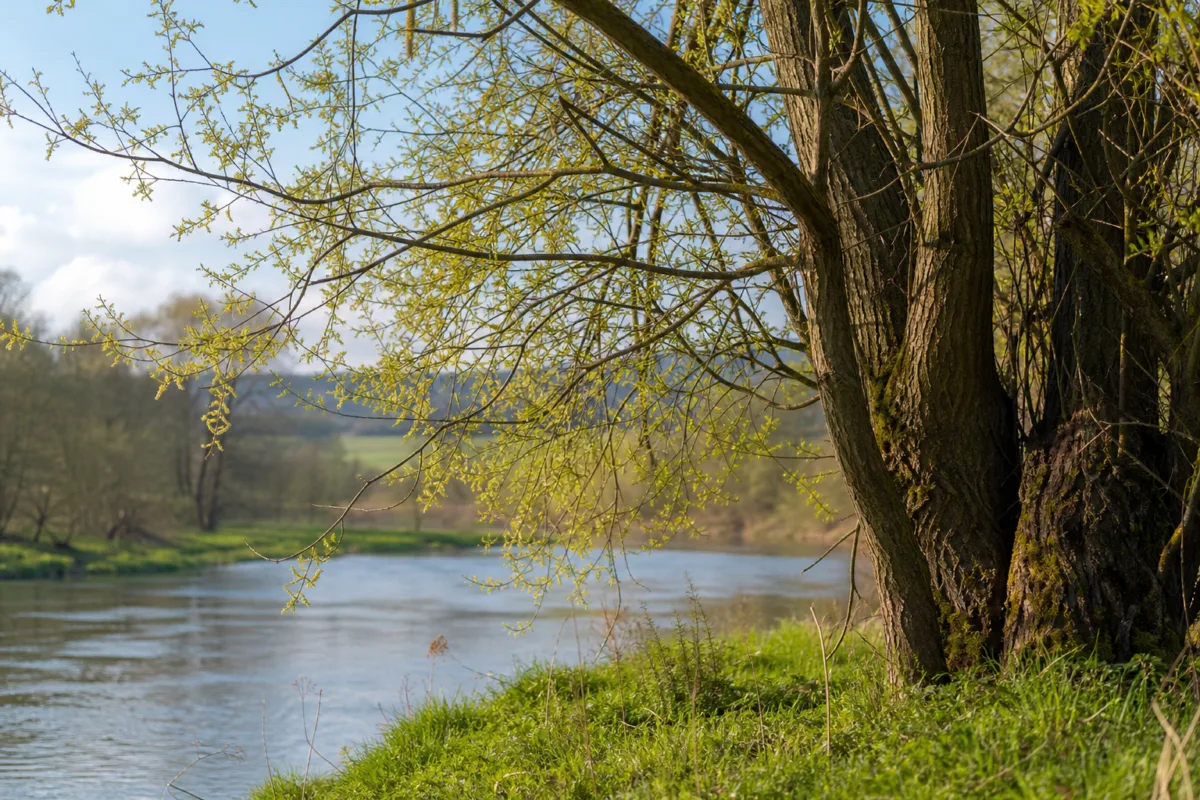
Willows (genus Salix) are fast-growing deciduous woody plants with enormous variation: from creeping “mini-willows” in the mountains to massive trees along large rivers. In the Czech landscape they are exceptionally important because they stabilise riverbanks, regenerate quickly after damage, and in spring provide pollen and nectar when most trees are not yet in bloom.
In practice, you’ll encounter willows almost anywhere there is water and light: on alluvial deposits, in floodplain forests, around fishponds, along damp field margins and even in towns and cities. The genus is also famous for frequent hybridisation—without details (buds, leaves, catkins) identifying a willow to species can sometimes be surprisingly difficult.
Quick overview
| Scientific name | Salix L. |
|---|---|
| Family (APG IV) | willow family (Salicaceae) |
| Form | shrubs and trees; often multi-stemmed, readily coppicing |
| Height | in the Czech Republic typically 0.05–30 m (the tallest tree willows around 25–30 m) |
| Lifespan | often 30–120 years; some old pollarded willows can persist longer thanks to renewal from regrowth |
| Leaves | alternate, simple, often lance-shaped; margins entire to serrated |
| Flowering | early spring (often III–IV), in catkins; most species are dioecious |
| Fruit | capsule with many tiny downy seeds (wind-dispersed) |
| Typical habitat in the Czech Republic | watersides, floodplains, wetlands, springs, bogs; some species also on dry gravels and at higher elevations |
| Protection | the genus as a whole is not protected, but some bog and mountain species are critically endangered in the Czech Republic and legally protected |
How to recognise a willow (and what to watch out for)
Willows are most reliably recognised by a combination of traits: buds held close to the twig (in many species with a single bud scale), catkins (male and female on different plants), and fast growth with soft wood. In the field, however, you’ll often run into hybrids, especially among tree species along rivers.
- Catkins (“pussy willows”): appear very early. Male catkins are often striking with yellow pollen; female catkins form capsules after flowering.
- Leaves: typically lance-shaped to ovate, often finely toothed. In some species the underside is grey-felted (giving a “silvery” look).
- Rods: young shoots are often long, flexible and regrow quickly after cutting—typical of basket willows.
- Bark and habit: tree willows often have furrowed bark and irregular crowns; “pollarded willows” are created by repeated cutting.
Identification tip: if you don’t have catkins, try at least to photograph (or describe) the buds, the upper and lower leaf surfaces, stipules and the habitat (dry gravelly sand vs wetland vs bog). With willows, the setting is often as telling as the leaf itself.
The most important willow species in the Czech Republic
Many willow species (including small mountain species) grow in the Czech Republic, along with numerous hybrids. Below are the most common and ecologically important ones you’re likely to encounter in lowlands and mountains alike.
Tree willows along rivers and on alluvial deposits
- White willow (Salix alba) – a typical floodplain and riverbank tree willow, often 15–25 m tall, with narrow leaves that can look silvery.
- Crack willow (Salix fragilis) – a large tree whose branches break easily (especially in wind); common by water and in urban areas.
- Hybrid willow (Salix × rubens) – a very common hybrid (S. alba × S. fragilis) along watercourses; in the field it may sometimes be more frequent than the “pure” parents.
Shrub willows of wetlands, ditches and woodland edges
- Goat willow (Salix caprea) – one of the best-known willows, often on drier woodland margins and clearings; broader leaves and conspicuous spring catkins.
- Grey willow (Salix cinerea) – a shrub or small tree of wet meadows, springs and alder carr; leaves grey-felted underneath.
- Eared willow (Salix aurita) – a lower shrub of damp soils, often on acidic sites; smaller leaves, often with conspicuous stipules.
“Withies”: basket and riverbank willows
- Purple willow (Salix purpurea) – flexible rods, often with a purplish tint; common on gravels and banks, excellent for weaving and living structures.
- Common osier (Salix viminalis) – long straight rods, a traditional raw material for basketry; often cultivated and sometimes naturalised.
- Almond willow (Salix triandra) – rods with good strength, also used in bank stabilisation; leaves often appear a “fresh green”.
- Violet willow (Salix daphnoides) – strikingly glaucous (bluish, waxy) rods, often on gravelly alluvium and river terraces.
- Grey-leaved willow (Salix eleagnos) – gravel bars and mountain streams; narrow greyish leaves, an excellent pioneer woody plant.
Mountain and bog willows (often rare)
- Dwarf willow (Salix herbacea) – extremely low, creeping willow of alpine and subalpine zones (e.g., in the Krkonoše/Giant Mountains, Czech Republic); among the smallest woody plants in Europe.
- Net-leaved willow (Salix reticulata) and wrinkled willow (Salix retusa) – creeping species of rocky, cold habitats.
- bog willow (Salix myrtilloides) and downy willow (Salix lapponum) – relict bog species; in the Czech Republic they are among the most endangered willows and require strict habitat protection.
The genus Salix hybridises easily; transitional forms are common in lowlands. For everyday orientation, however, it’s often enough to distinguish groups: tree willows of floodplains, goat-willow type shrubs on woodland margins, and withy willows on gravels and banks.
Where willows grow in the Czech Republic and their ecological role
Willows are typical of dynamic habitats—places where soils change frequently: floods, erosion, gravel deposition, fluctuating water levels. Thanks to rapid rooting and growth, they can quickly colonise open ground and stabilise it.
- Floodplains and riverbanks: tree willows and withy willows form stands that slow the current, trap sediment and reinforce banks.
- Wetlands and springs: shrub willows provide cover for birds and small mammals and maintain a mosaic of light and shade.
- Bogs: specialised, often threatened species indicate an intact water regime.
- Mountains: creeping willows protect soil from erosion and create microhabitats for invertebrates.
Willows are especially valuable during flowering: some species provide early pollen and nectar, crucial for honeybees, bumblebees and other pollinators after winter. In landscapes where diverse edges and flowering shrubs are disappearing, willows are among the most reliable “starter sources” of food.
Willows also host an extraordinary range of organisms: from aphids and leaf-eating insects to rust fungi and birds nesting in cavities of old pollarded willows. These old trees are often biologically more valuable than young plantings.
Wood, rods and practical uses
Willow wood is generally soft, light and flexible, with low durability outdoors. Historically, it was used more where availability and ease of working mattered than long service life.
- Basketry and woven products: rods (S. viminalis, S. purpurea, S. triandra) are classic materials for baskets, hampers and garden features.
- Bank stabilisation: living woven structures, planting cuttings into banks, and planting on erosion-prone sites.
- Biomass: some willow clones are grown as fast-growing coppice for woodchips (short rotation), typically on wetter soils.
- Traditional pollarded willows: regularly cut trees provided rods, fuel and material while also shaping the character of the landscape (e.g., in the Elbe lowlands and Moravian floodplains, Czech Republic).
Willow chemistry is also interesting: the bark contains salicin and related compounds—historically important as inspiration for the development of acetylsalicylic acid (aspirin). This is not an invitation to home “self-treatment”: levels of active substances vary by species and habitat, and adverse effects can occur.
Growing willows in the garden (and when to avoid them)
Willows are excellent when you want fast greenery, soil reinforcement or an early-flowering woody plant. At the same time, they can be “uncompromising”: they grow quickly, love water, and some species may seek out moisture with their roots even in built structures (not all do, but there is a risk near water pipes and drains).
Site: soil, light, water
- Light: most willows need sun to partial shade; in shade they become sparse and lose vigour.
- Soil: they tolerate a wide range; ideal are loamy to sandy-loam soils with sufficient moisture.
- Water: willows tolerate periodic flooding, but newly planted trees must be watered in dry periods (especially in the first 1–2 seasons).
Planting and propagation (cuttings work surprisingly well)
Willows are among the easiest woody plants to propagate from cuttings. For many withy species, it’s enough to push a hardwood cutting (e.g., 20–30 cm) into moist soil so that at least two thirds is below ground. Tree willows can also take from thicker “stakes”, but for a long-term stable tree it’s better to plant a quality young tree with a well-developed root system.
- plant in spring or autumn into moist soil with good contact
- water thoroughly after planting and mulch (not against the trunk)
- for living willow structures, plan regular watering for the first season
Pruning and care: pollarded willows and garden shrubs
Willows tolerate pruning extremely well. Regular cutting is exactly what maintains the “head” and extends the functional lifespan of pollarded willows (while also creating cavities that are valuable for biodiversity).
- Basket willows: cut low to the ground (annually up to every 2–3 years depending on the goal).
- Ornamental and riverbank willows: do shaping pruning during dormancy; willows usually cope well with hard renovation pruning.
- Safety: older tree willows have more brittle branches; near roads and buildings, plan for ongoing inspection and safety pruning.
Diseases and pests (most common issues)
- Willow rust (Melampsora spp.) – orange pustules on leaves, premature leaf drop; an airy crown, clearing fallen leaves and choosing more resistant clones helps.
- Aphids and other sap-suckers – leaf deformation, honeydew; often it’s enough to support predators and avoid drought stress.
- Leaf-eating beetles (e.g., leaf beetles on willows) – chewed leaves on young plantings.
- Wood-decay fungi – common on old trees and pollards; focus mainly on stability and safety, not “sterility”.
Interesting facts and cultural significance
- “Pussy willows” are a traditional symbol of early spring and feature in folk customs. For nature, however, they are above all an early food source for pollinators.
- Willows and poplars are close relatives in the same family (Salicaceae); in the landscape they often form mixed floodplain stands. If you’re also interested in poplars, see the related article Poplar: species, identification, occurrence in the Czech Republic and growing.
- Old pollarded willows are “an ecosystem in themselves”—many insect and bird species use their cavities, dead wood and microclimate.
Willows in the context of Czech trees
Willows are among the characteristic broadleaf trees of our wet habitats, much like alders or poplars. If you’d like a broader overview of broadleaf trees in the Czech Republic, the hub page Broadleaf trees may be useful. For comparison with pioneer trees on poorer soils, we also recommend Birch: species, identification, occurrence in the Czech Republic and growing.
Summary
Willows (Salix) are among the most important water-associated woody plants in the Czech Republic: they grow quickly, stabilise banks, tolerate pruning and feed pollinators in early spring. In the field it’s often practical to distinguish tree willows of floodplains, goat-willow type shrubs, and withy willows used for rods and basketry. In gardens they are excellent for damp spots and living structures, but they need space and you must account for their rapid growth.
FAQ
When do willows flower in the Czech Republic?
Most willows flower very early in spring, often from March to April (depending on the species and elevation), producing catkins. That’s exactly why they are so important for early pollinators.
How can I tell goat willow from other willows?
Goat willow (<em>Salix caprea</em>) typically has broader, more oval leaves and often grows away from water (woodland edges, clearings). Its spring catkins are conspicuous and appear before the leaves emerge.
Can you grow a willow from a twig?
Yes. Many willows root very readily from hardwood cuttings. Success is much higher with moist soil and plenty of water in the first weeks after inserting the cutting.
Is a willow suitable by a garden pond or the bank of a stream?
Often yes, because it reinforces the bank and tolerates wet ground—but choose a species to match the space (shrub or withy willows rather than huge trees). Near built structures and drains, it’s wise to keep a distance because roots may seek out water.
Why are willows by rivers so often crooked or broken?
Tree willows have more brittle wood and branches can break in wind or under snow load; they are also exposed to erosion and floods. At the same time, they resprout very well, so they regenerate quickly after damage.
Are any willows protected in the Czech Republic?
Yes. The genus as a whole is not protected, but some rare bog and mountain species (e.g., <em>Salix myrtilloides</em> or <em>Salix lapponum</em>) are critically endangered and tied to protected habitats.